Learn what the first solo flight means, how a student prepares for it and why the instructor's assessment is key to moving forward in training.
There's a moment in training that many pilots remember with special emotion: taking the cockpit and making their first solo flight. Behind that takeoff there's study, practice with an instructor and preparation that begins long before reaching the runway.
If you're thinking about studying aviation, understanding what this stage means will help you know the process better. The first solo flight marks a step forward in the student's autonomy, within the conditions and limitations authorized for their training.
What does making your first solo flight mean?
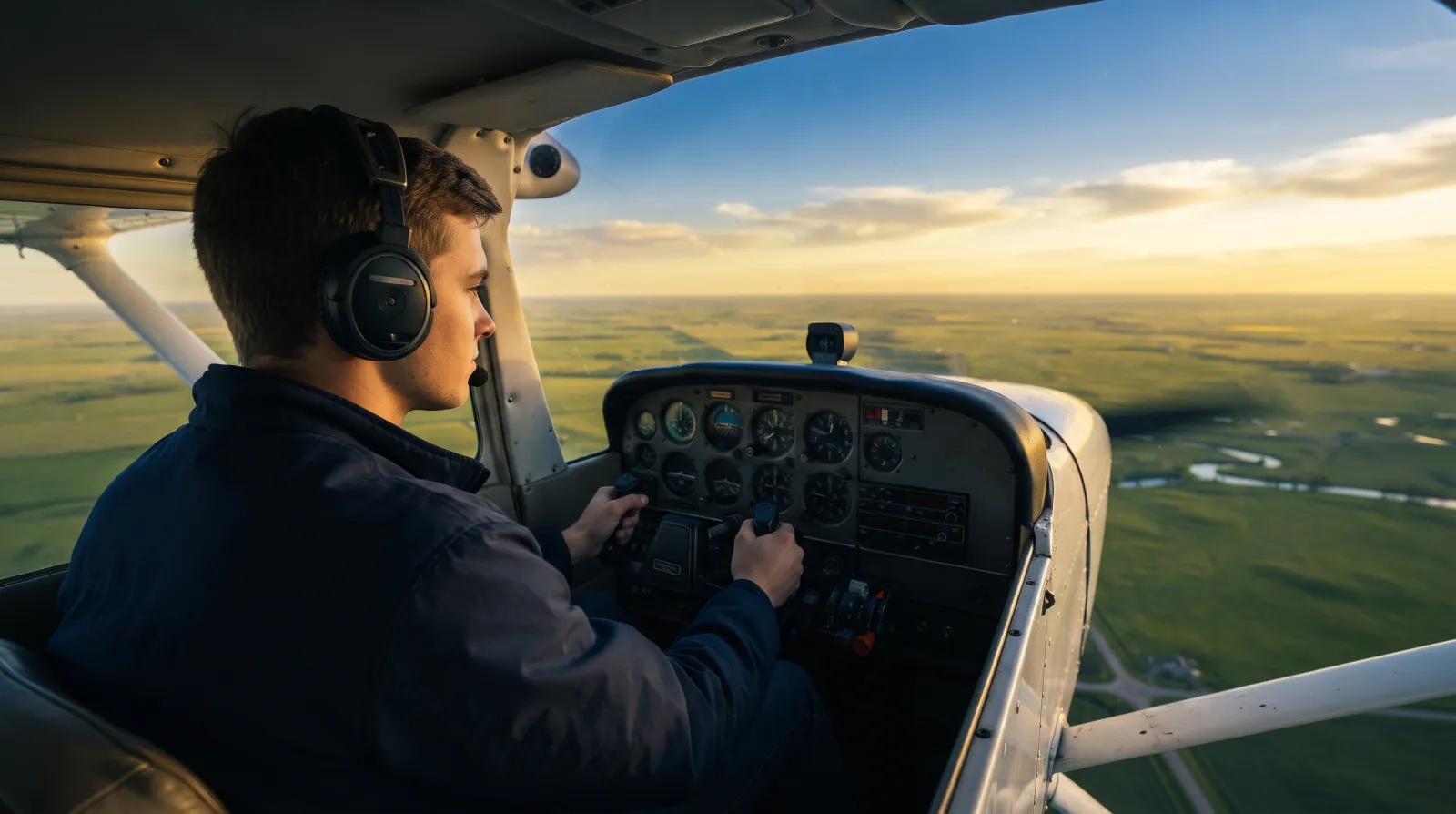
In initial airplane training, a solo flight is one in which the student pilot is the only occupant of the aircraft. They apply the knowledge and skills worked on during instruction, without the instructor on board.
The first flight of this kind is an important step: the student takes charge of carrying out the authorized flight and shows they can put what they learned at that stage into practice.
Preparation and the corresponding authorizations remain part of the process. Reaching this milestone doesn't automatically grant a Private Pilot or Commercial license, nor does it allow any kind of operation.
What happens before you take off solo
Learning combines ground knowledge and flight practice. The exact sequence depends on the program, the aircraft and the student's progress, but these are some of its components:
Understanding the aircraft and its procedures
The student gets familiar with the systems, instruments, characteristics and limitations of the airplane they use. They also learn the reasoning behind procedures and the importance of using checklists.
Practicing with the instructor
Instruction flights work on skills such as aircraft control, communications, takeoffs, approaches and landings. Practice helps identify difficulties, receive corrections and develop more consistent performance.
Preparing every operation
Reviewing weather information, knowing the aerodrome environment and taking part in preparing the aircraft help you understand that an operation begins on the ground. Making decisions and recognizing your own limitations are also part of learning.
Autonomy is built step by step. The goal is for the student to understand what they're doing, apply it with judgment and progress according to their instructor's assessment.
How is it decided that a student is ready?
The instructor guides the training, observes performance and assesses the student's readiness for the activity to be authorized. That assessment considers how knowledge, procedures and skills are applied in the aircraft used.
The decision must take into account the applicable requirements, the necessary authorizations and the conditions expected for the flight. A single good practice session or eagerness to reach the moment doesn't replace that assessment.
The student's readiness and the conditions of the operation must match. If more training is needed or the circumstances aren't right, the process is adjusted before continuing.
After how many hours is the first solo flight made?
It's one of the most common questions from those just starting. To answer it, you need to consider the training program, its requirements and the student's individual progress.
It isn't wise to promise a date or a fixed number of hours for every student. Completing a stage of the program and showing the necessary readiness must be assessed together.
How often you practice, how well you absorb the knowledge and the continuity of training can affect your progress. Comparing yourself with another student helps less than understanding your instructor's feedback and working on what needs improvement.
What this moment brings to your training
The first solo flight lets you recognize the value of the work done and take on greater responsibility within training. For many students, it's also an experience that strengthens their motivation to continue.
- Discipline: applying what you've learned in an orderly way.
- Judgment: acting within the authorized conditions and limits.
- Attention: integrating the tasks of the flight and keeping situational awareness.
- Responsibility: recognizing that confidence rests on preparation and procedures.
Every student experiences this moment differently. Feeling excited or uneasy is something you can talk about with your instructor; voicing a doubt in time helps guide your learning.
What comes after the first solo flight?
Training continues. The student keeps developing the knowledge, experience and skills the chosen program requires, through the corresponding activities and evaluations.
The following stages are carried out according to the training plan and the applicable authorizations. An initial solo flight shouldn't be confused with a general authorization to fly anywhere or carry passengers.
Later on, completing the requirements for a license means meeting the academic, practical and administrative conditions that apply.
Start your training at Falcon
At Falcon Aviation Academy you can explore the Private Pilot (airplane) and Commercial Pilot (airplane) programs, their requirements and the options to start your process.
Our base of operations is at Vanguardia Airport, in Villavicencio. Learning how ground and flight training work will help you understand the path of the program that fits your goals.
Frequently asked questions about the first solo flight
Do I need to know how to fly before joining?
Initial training is designed to build knowledge and skills step by step. Check the entry requirements of the program you're interested in.
Is the instructor inside the aircraft?
On the student's solo airplane flight, the student is the only occupant. The activity takes place within the training framework and the corresponding authorizations.
Does making the first solo flight mean you've finished the course?
It's a milestone in the process. The program's activities, evaluations and requirements continue afterward.
Your first solo flight starts with the first step
Learn how to start your training, which requirements you need to meet and which program fits your goal.
References: Aerocivil: definition of solo flight time; Colombian Aviation Regulations, RAC 61; FAA: Student Pilot Training and Limits.
The FAA reference is included as international educational support. Training requirements and authorizations in Colombia must be checked with the academy and current Colombian regulations.
Published on October 27, 2026