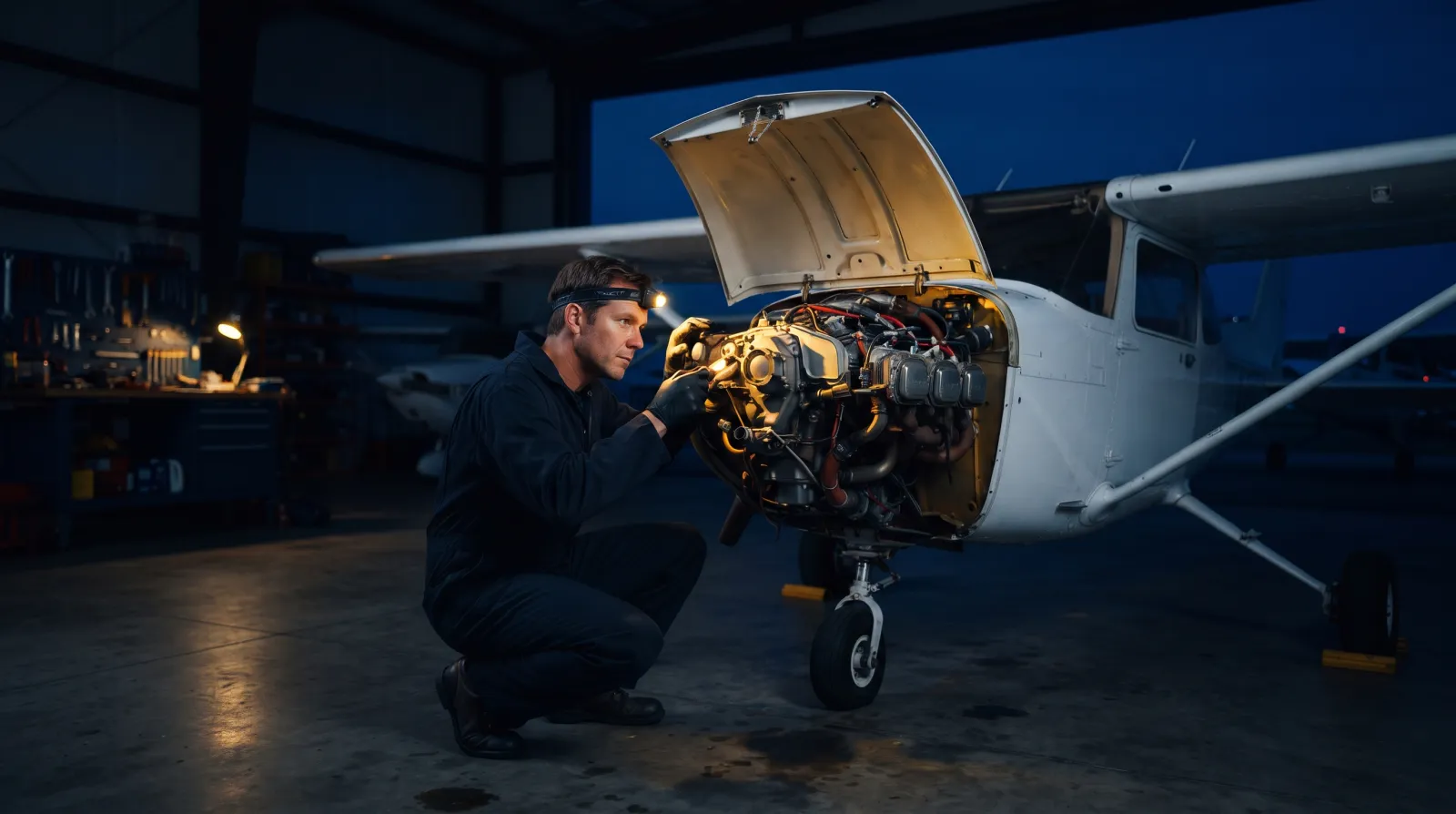
Training involves repeated takeoffs, approaches and landings. That use makes it especially important to coordinate flight scheduling with the inspections and work each aircraft requires.
Before a student starts the engine, there's work that rarely shows up in the photo of the first flight: inspections, technical follow-up, records and decisions about the aircraft's condition. Understanding that work is also part of learning to be a pilot.
Aircraft maintenance at a flight school connects knowledge of systems with a fundamental idea: every flight requires an aircraft in proper operating condition and people who know their responsibilities.
What is aircraft maintenance?
It's the set of technical activities meant to preserve or restore the condition of an aircraft and its components, following the applicable documentation and requirements. It can include inspections, adjustments, repair or replacement of components, and functional checks.
It isn't only about stepping in when a failure appears. It also means planning work, addressing findings and keeping track of tasks done and pending. Airworthiness combines conformity with the applicable design and the condition for safe operation.
Why does it matter during pilot training?
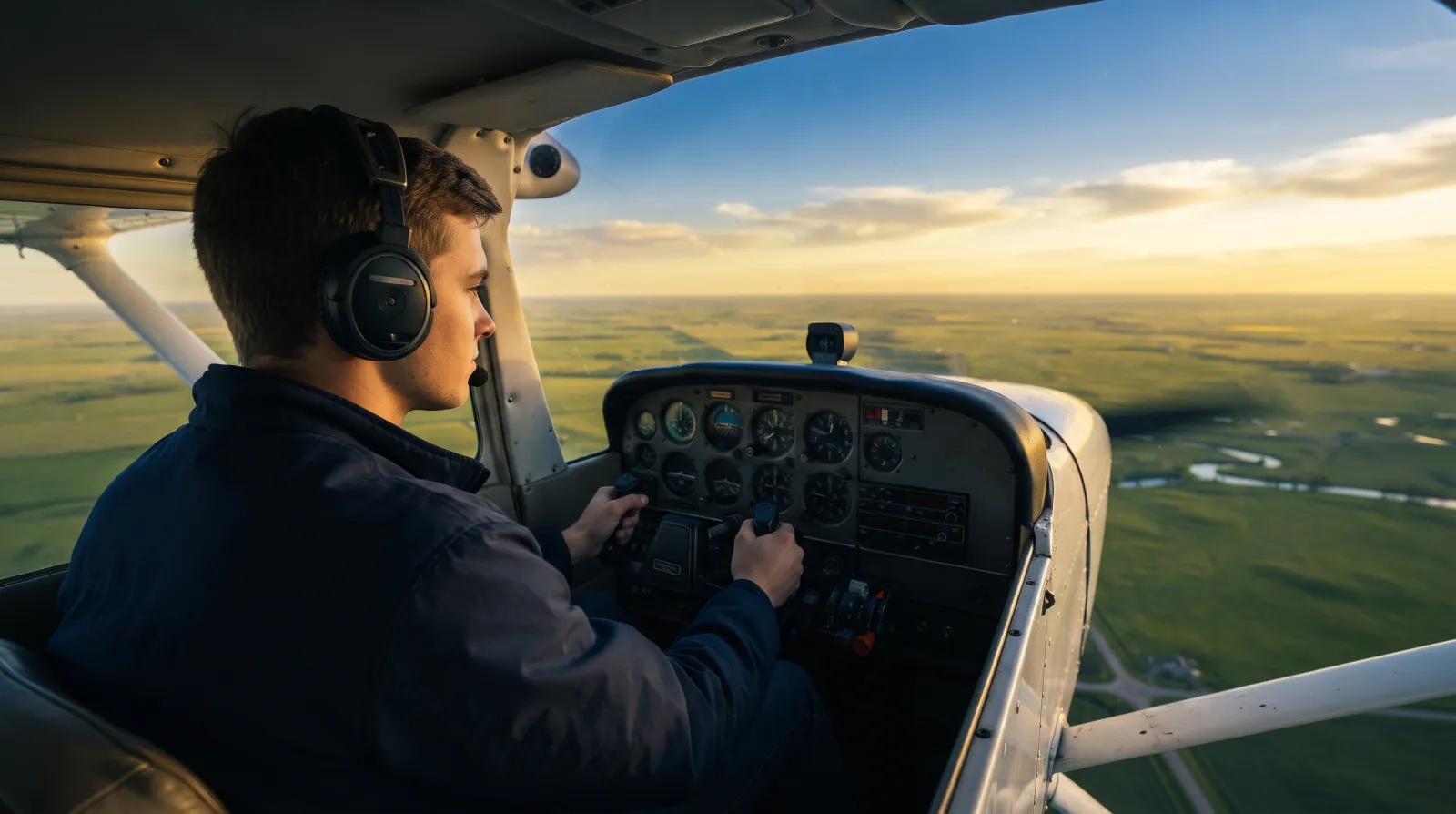
Training involves repeated takeoffs, approaches and landings. That use makes it especially important to coordinate flight scheduling with the inspections and work each aircraft requires.
For the student, understanding that relationship helps develop three professional habits:
- Observing with judgment: relating what you study about systems to what you find while preparing the flight.
- Communicating precisely: describing an observation to the instructor and following the established reporting procedure.
- Respecting a technical decision: understanding that an aircraft may need attention before its schedule continues.
A lesson that also happens on the ground: postponing a flight to resolve an issue is a chance to learn to put the aircraft's condition ahead of the pressure to complete an activity.
Maintenance goes beyond the engine
The engine usually gets the attention, but an aircraft works as a set of systems. Depending on the model and the scheduled task, the work can cover:
- Engine and propeller: inspections, checks and work according to their technical documents.
- Landing gear and brakes: components involved in taxiing, takeoff and landing.
- Electrical system and instruments: equipment needed for the aircraft's functions.
- Flight controls and control surfaces: elements that transmit and carry out the pilot's inputs.
- Structure and protection: checking for damage, corrosion and the condition of surfaces, as applicable.
This list is a guide: the scope of each job is set by the applicable technical documentation. Not all aircraft have the same configuration or need the same work at the same time.
The 2,000 hours and the overhaul: understanding the context
In the maintenance content we share at Falcon, we explain a case in which, on reaching 2,000 hours, the engine is removed and sent for a general overhaul.
An overhaul generally includes disassembly, cleaning, inspection, repair where needed, reassembly and testing according to the corresponding technical data. Its scope is different from that of a routine inspection.
The interval between overhauls depends on the engine model, the manufacturer's documentation, the applicable conditions and the maintenance program. The 2,000 hours in the example shouldn't be read as a universal rule for all aircraft or engines.
Preflight inspection and maintenance: complementary roles
The preflight inspection lets the pilot assess aspects of the aircraft before the operation, following the corresponding manual and checklist. It's a moment to observe, check and detect possible issues.
However, the preflight inspection doesn't replace technical maintenance. Likewise, maintenance work doesn't remove the need to prepare and check the aircraft before the flight.
During training, the student learns these tasks with their instructor. If they find a condition that raises doubts, they must report it and follow the established procedure, without improvising a repair or assuming the observation doesn't matter.
Technical work, supervision of instruction and pilot preparation have different scopes. Coordinating them helps build an organized operation.
Falcon: learning close to the operation
Falcon has a base of operations and a hangar at Vanguardia Airport, in Villavicencio. That environment lets you get close to the work that goes along with flight training and understand that aviation involves a team.
In our content about maintenance and airworthiness management, we show part of that work. For someone just starting, knowing about it helps them value procedures, technical follow-up and communication between the people involved in the operation.
The training goal is for the future pilot to understand their responsibilities and know when to consult the instructor or the competent team.
What to ask before choosing a flight school
Besides the academic program and the flight hours, it's worth knowing how the operation is organized. These questions can help you talk with the academy:
- How are instruction flights coordinated with maintenance needs?
- How does the student learn to do the preflight inspection?
- What procedure is followed when a student or instructor reports an issue?
- How are schedule changes communicated when an aircraft needs attention?
The answers help you understand the environment you'll learn in and how much procedures matter in daily activity.
FAQ
Do I need to know mechanics before studying aviation?
You don't need to arrive as a technician. During your training you'll build knowledge of the aircraft's systems and their operation, according to the program you take.
Does the student do the repairs?
Pilot training alone doesn't authorize you to do repairs. Learning to inspect, observe and report is different from carrying out technical work.
Does an aircraft that was just serviced need a preflight inspection?
Yes. Preparation before the flight and maintenance play complementary roles; one doesn't replace the other.
Get to know the environment where you'll learn to fly
Choosing an academy also means knowing how ground school, flight practice and the team's work connect.
At Falcon we can guide you on our Private Pilot and Commercial Pilot programs, the entry requirements and our base of operations in Villavicencio.
Want to start your training?
References for further reading
- FAA · Airplane Flying Handbook, chapter 2: preflight preparation and inspection.
- eCFR · Technical description of overhaul and rebuild, 14 CFR 43.2.
- Lycoming · Service Instruction 1009BF: overhaul intervals by model.
- Falcon · The training environment in Villavicencio.
International references are included as general technical background; operations in Colombia follow Colombian requirements and the documentation that applies to each aircraft.
Published on October 18, 2026 · Updated on October 27, 2026