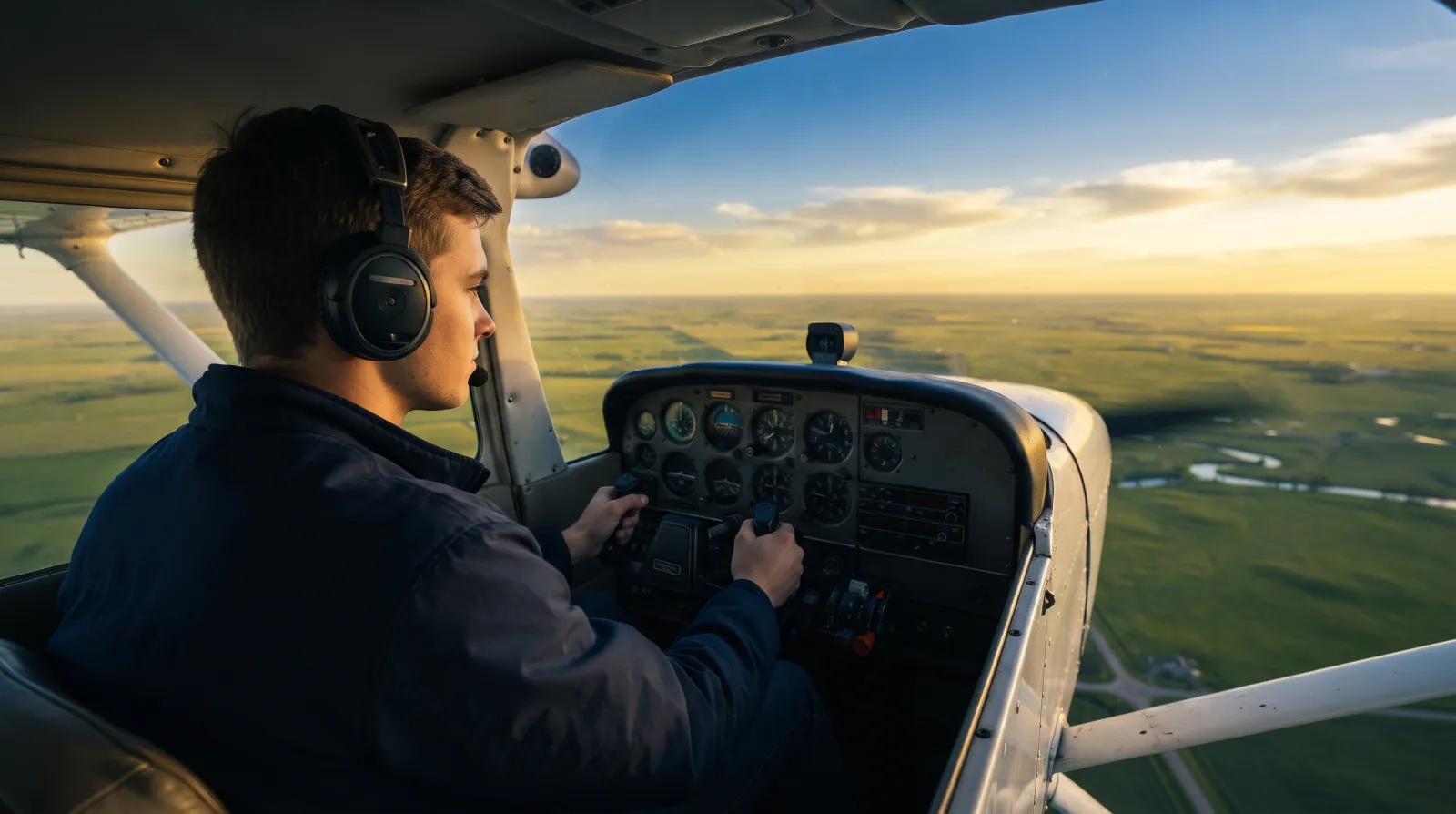

Innovation for private and commercial pilots: electric, hybrid and SAF. Train at Falcon to fly with efficiency, sustainability and a competitive edge.
What should private and commercial pilots know?
In the aviation industry, pilot training is no longer just about mastering the aircraft, procedures and meteorology.
With technology advancing faster every day, pilots, whether private or commercial, must be ready for an environment that is moving toward electric, hybrid and sustainable flight.
At Falcon Aviation School we want our students not just to fly, but to do it with an eye on the future.
That's why we bring you a complete look at the main technology trends changing aviation.
1. Why does it matter to you as a pilot?
- Regulators and the industry are aiming to decarbonize aviation: cutting CO₂ emissions, noise and pollution at airports.
- New aircraft (or adapted current ones) will include technologies that directly affect your training, operations, maintenance and flight procedures.
- The aviation market is evolving, and the best-prepared pilots, with knowledge of electric and hybrid systems and SAF (Sustainable Aviation Fuels), will have a competitive edge.
- As a school that trains professional pilots, Falcon is committed to bringing these trends into its programs, preparing students for the "cockpit of tomorrow".
2. Technology trends you should know
A) Electric and hybrid propulsion
Electric and hybrid aviation represent a radical change. Hybrid systems combine traditional engines with electric motors to improve efficiency and cut emissions.
- Example: some manufacturers estimate that hybrid systems could reduce fuel use by up to 30% compared with current technology.
- Challenges: battery energy density, weight, charging infrastructure.
- What every pilot should know: how electric and hybrid propulsion systems work and how they affect performance, the checklist and in-flight energy management (takeoff, cruise, landing).
B) Sustainable Aviation Fuels (SAF) and synthetic fuels.
Using sustainable fuels is a practical short- and medium-term solution, since they can be used in many existing aircraft with minor adaptations.
- According to the International Energy Agency (IEA), by 2030 aviation will account for more than 75% of new biofuel demand in transport. IEA
- As a pilot you should know: what SAF is, how it differs from traditional fuel, how it can affect aircraft certification and what impact it has on operations (weight, density, consumption).
C) Hydrogen and other emerging technologies
Beyond electric and hybrid, aviation is also exploring hydrogen, fuel cells and radical aircraft designs.
- One example: the company ZeroAvia is working on hydrogen powertrains for regional aircraft.
- For a pilot: knowing this trend positions you as a professional who understands where the industry is going, not just where it is today.
3. What does this mean for private and commercial pilot training?
- In private pilot training: you'll learn not only to fly, but to adapt to new technologies, understand alternative systems and prepare for aircraft that will increasingly behave differently from what's usual.
- In commercial pilot training: you'll have an edge over crews who only know traditional technology. Knowing about SAF, electric and hybrid aircraft can open doors at airlines investing in modern fleets.
- At Falcon: we include up-to-date content, workshops on electric and hybrid systems, and talks on sustainability in aviation, so our students stay ahead.
4. Challenges and opportunities for those who fly
Challenges:
- Learning curve: understanding new technologies and adapting.
- Infrastructure: airports, charging stations, SAF supply.
- Certification and regulation: new systems mean new rules, new licenses or requirements.
Opportunities:
- Professional differentiation: being a pilot prepared for the aviation of the future.
- New operating niches: smaller aircraft, electric and hybrid aircraft, urban air mobility (UAM).
- Sustainability as a value: more and more operators value pilots who understand environmental impact and modern systems.
5. What can you do NOW to prepare?
- Be curious: keep reading about sustainable, electric and hybrid aviation.
- Ask your school (like Falcon) about the training blocks that include alternative propulsion technology.
- Add courses or technical modules on new systems (batteries, electrical systems, energy management).
- Network: attend conferences, webinars and aviation fairs where these topics are discussed.
- Adopting this mindset makes you a forward-looking pilot, something both instructors and employers value.
6. Conclusion
Aviation is going through a deep transformation. For you, as a private pilot or someone aiming to fly commercially, it means knowing how to fly won't be enough: you'll need to understand what airplane you're flying, with which propulsion system, what its impact is and what its operating particularities are.
At Falcon Aviation School we understand this reality, and that's why we prepare pilots for the aviation of today and tomorrow.
Electric and hybrid technology and sustainable fuels aren't just "engineering topics": they're part of the profile of the pilot who will lead the cockpits of the next generation.
✈️ If you want to train as a pilot in an environment committed to innovation, quality and the future, we're waiting for you at Falcon. Your flight to tomorrow starts today.
Published on November 20, 2025 · Updated on November 24, 2025