It gives the pilot a first structured approach to the operating philosophy, cockpit, systems and procedures of the Airbus A320 family.
Moving from a training aircraft to operating an airliner means facing a more complex cockpit, new systems, automation and procedures designed for coordinated crew work.
The PRE-TYPE A320 course gives the pilot a first structured approach to the operating philosophy, cockpit, systems and procedures of the Airbus A320 family.
Besides theory, getting familiar with a cockpit similar to the real aircraft can help the pilot better understand the spaces, controls, workflows and dynamics of a multi-pilot operation.
But what does PRE-TYPE mean? Is it the same as a type rating? What can you practice in an A320 simulator? And how can this training contribute to a pilot's professional preparation?
What is an A320 PRE-TYPE course?
A PRE-TYPE is a preparatory familiarization course that introduces the pilot to the fundamentals of a specific aircraft before a possible type rating or other training and evaluation processes.
In the case of the Airbus A320, the pilot can begin to recognize:
- The general cockpit layout.
- Panels, controls and instruments.
- The aircraft's main systems.
- Operating procedures.
- Checklists.
- Automation.
- Flight management.
- Communication and coordination in the cockpit.
- Workflows between crew members.
Its purpose is to close the gap between a pilot's initial training and the operating environment of a more complex commercial aircraft.
Is the A320 PRE-TYPE a type rating?
No. The PRE-TYPE is prior preparation or familiarization. It doesn't replace a type rating and doesn't on its own authorize you to operate an Airbus A320 commercially.
A type rating is a formal training and evaluation process tied to a specific aircraft and subject to the applicable regulatory requirements.
Depending on the program and the authority, this process can include ground training, simulator training, evaluations and other specific phases.
The PRE-TYPE can make later content easier to understand and help the pilot arrive more familiar with the aircraft, but it doesn't replace the training or the official requirements of a type rating.
Who is it for?
The training can be useful for different profiles in aviation:
- Pilots currently in training.
- Commercial pilots who want to strengthen their professional preparation.
- Graduates who want to get familiar with an A320 cockpit.
- Pilots preparing for selection processes.
- Pilots about to start more complex training.
- Active pilots who want to brush up on knowledge or procedures.
- Professionals looking to update or strengthen their skills.
- Pilots who want to practice normal, abnormal or emergency procedures.
- Airlines that need tools for training, preparation, recurrent training or evaluation.
Important: the scope of each session or program depends on the training goals, the content purchased and the applicable requirements.
What is Falcon's A320 simulator like?
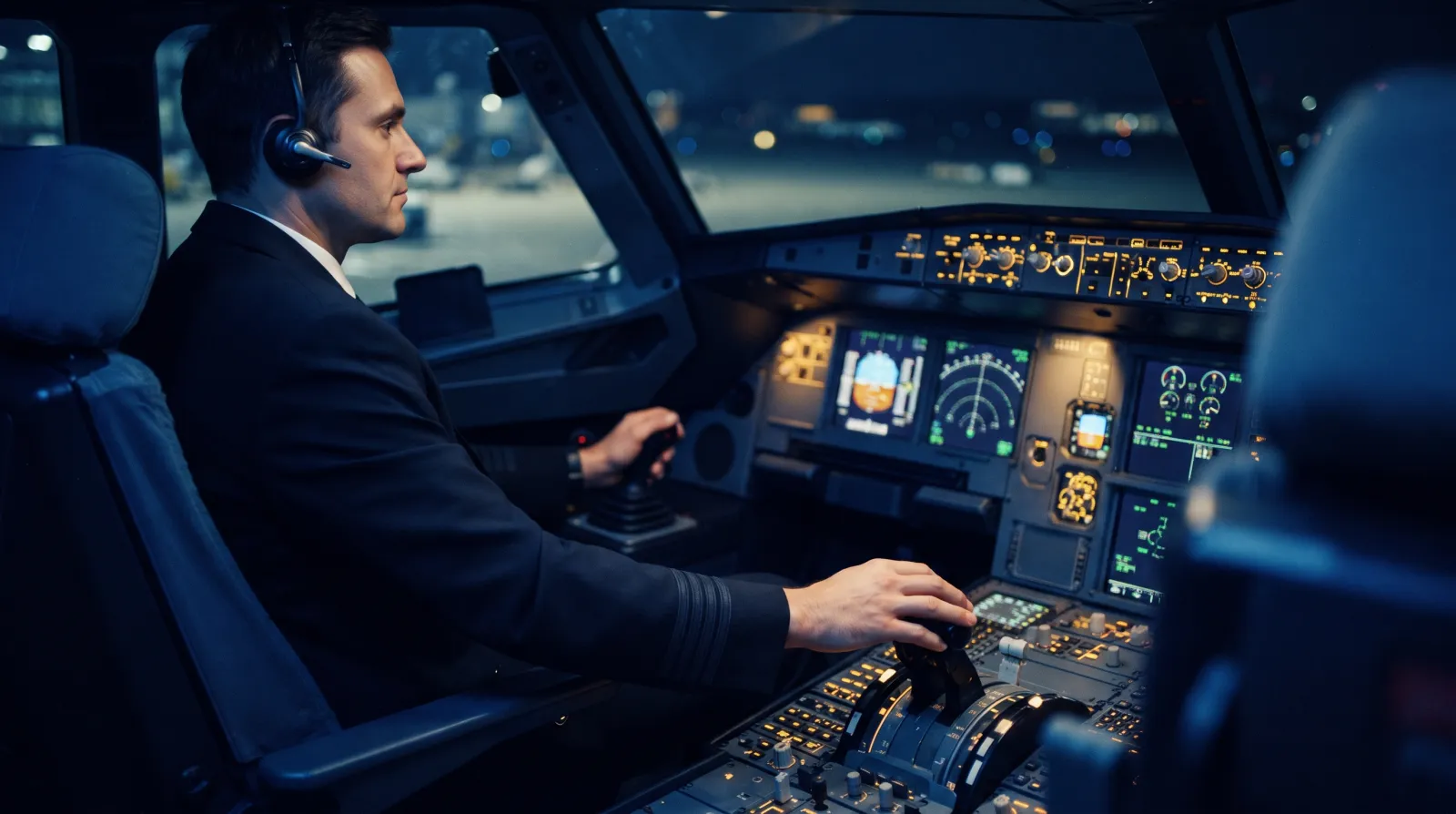
The simulator Falcon uses has dual controls and is designed to bring the pilot close to the physical and operational layout of an A320 cockpit.
One of its main features is the use of physical controls, panels and buttons instead of relying only on touchscreens.
This lets the pilot interact with the cockpit elements in a way closer to how they would inside a real aircraft.
Familiarization isn't only about recognizing instruments.
It also means understanding the dimensions, distances, location of controls and sequences of interaction inside the cockpit.
Repeating these actions can support physical familiarization and the development of muscle memory, helping the pilot remember more naturally where certain elements are and how to carry out different cockpit flows.
What can a pilot learn during the training?
1. Cockpit familiarization
The pilot starts to identify the cockpit's panels, displays, controls, switches and work areas.
The goal isn't to memorize each component in isolation, but to understand how they relate during an operation.
2. Automation philosophy
The A320 family has a high level of automation. However, an automated operation requires understanding:
- What the aircraft is doing.
- Why it's doing it.
- What it will do next.
- What information the crew must monitor.
- When an intervention may be needed.
This helps develop proper situational awareness in an automated cockpit.
3. Main systems
Depending on the scope of the program and the exercise, you can work on systems such as:
- Hydraulic system.
- Electrical system.
- Pressurization.
- Air conditioning.
- GPS.
- Communications.
- Navigation.
- Flight management.
- Controls and systems related to the operation.
4. Procedures and planning
Different exercises can cover elements of planning and carrying out an operation, such as:
- Departure airport.
- Planned route.
- Headings.
- Altitudes.
- Speeds.
- Departure and arrival procedures.
- Operational sequences.
- Cockpit setup and preparation.
5. Cockpit flows and crew work
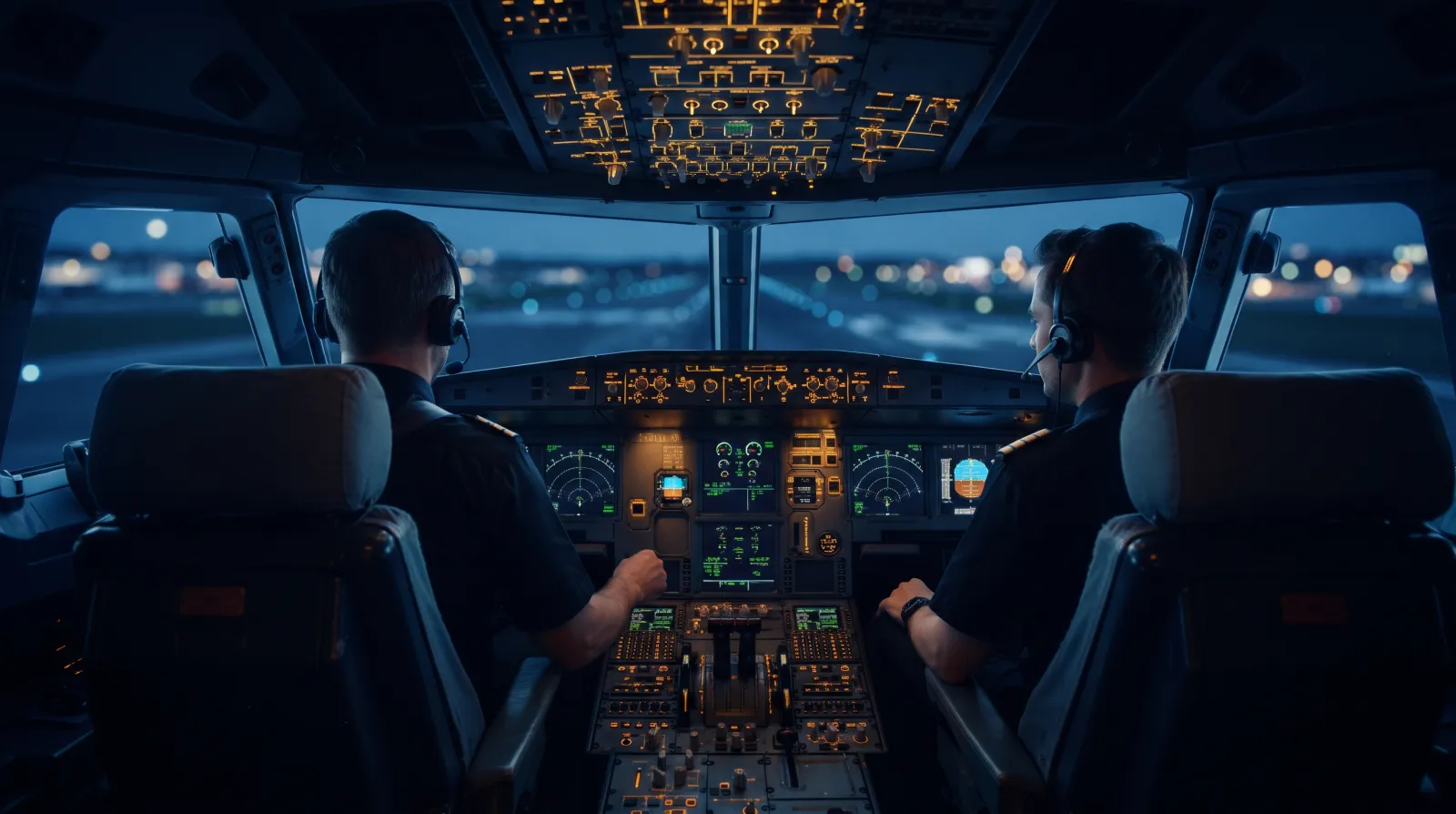
In a commercial operation, pilots work through coordinated roles, established flows and a clear division of tasks.
Practicing with dual controls brings you closer to the dynamics of communication, coordination, following procedures and cooperating with another crew member.
Training for failures, abnormal procedures and emergencies
One of the main advantages of a simulator is being able to work on scenarios that it wouldn't be wise to reproduce on purpose during a real operation.
Depending on the exercise, the instructor can stay with the pilots while an operator or engineer controls different conditions and failures from the corresponding station.
This makes it possible to introduce scenarios involving:
- Hydraulic failures.
- Electrical failures.
- Pressurization problems.
- Air conditioning system failures.
- GPS failures.
- Communication problems.
- Navigation-related situations.
- Abnormal procedures.
- Emergency procedures.
The goal is for the pilot to practice managing situations, following procedures, communicating and making decisions in a controlled environment.
Why is training in an A320 simulator important?
Simulation lets you repeat procedures, correct mistakes and receive feedback without using a real aircraft.
Physical familiarization
You learn where the panels, controls and cockpit elements are.
Repetition
Procedures can be repeated to reinforce sequences and correct mistakes.
Teamwork
Dual controls make it easier to practice coordination between pilots.
Failure management
You can simulate different operational scenarios in a controlled environment.
Other benefits can include:
- Recognizing the cockpit layout.
- Understanding operational sequences.
- Practicing reading and interpreting instruments.
- Improving coordination and task sharing.
- Strengthening decision-making.
- Receiving feedback from the instructor.
- Reinforcing normal, abnormal and emergency procedures.
Simulation doesn't replace every phase of real training, but it's an important tool in modern aviation preparation.
Certification and logging hours
Falcon Aviation Academy trains under the RAC 141 framework.
According to Falcon's institutional information, the A320 trainer used by the academy is certified by the Aerocivil and lets you log hours as an advanced A320 simulator in your logbook, within the scope of the applicable approval.
To find out how many hours can be logged, how they're recognized and under what conditions, it's best to confirm directly with Falcon's academic team based on the program you sign up for and the applicable regulations.
How can it help in a selection process?
Each airline sets its own requirements, evaluations and hiring processes. That's why completing a PRE-TYPE doesn't guarantee getting into a company.
However, prior familiarity with the cockpit, systems and procedures can help the pilot arrive better prepared for certain training or evaluation processes.
Among other things, it can help you:
- Feel more familiar with an airliner cockpit.
- Better understand questions about systems.
- Follow procedures in a more orderly way.
- Organize cockpit flows better.
- Communicate more clearly with another pilot.
- Adapt to teamwork exercises.
- Identify knowledge that needs reinforcement.
- Approach simulator exercises with more familiarity.
Important: completing a PRE-TYPE or simulator training doesn't imply or guarantee being hired by an airline.
Can active pilots and airlines also use the simulator?
Yes. An A320 trainer doesn't have to be limited to pilots who are just starting to get acquainted with this type of aircraft.
Depending on the needs and the established program, it can also be used to:
- Reinforce normal procedures.
- Practice abnormal procedures.
- Work on emergency procedures.
- Update knowledge.
- Strengthen crew skills.
- Run preparation exercises.
- Support recurrent training.
- Run certain evaluation exercises.
This makes the simulator a tool that can adapt to different stages of a pilot's career and to different training goals.
PRE-TYPE, type rating and recurrent training
Although these concepts relate to pilot training and preparation, they don't mean the same thing.
PRE-TYPE
Prior preparation or familiarization with an aircraft and its operating environment.
Type Rating
Formal, regulated training to obtain the rating for a specific aircraft.
Recurrent training
A periodic process through which an active pilot maintains, reinforces and verifies certain competencies.
Understanding these differences helps each pilot identify which kind of training best fits the current moment in their career.
What should you ask before signing up?
Before choosing an A320 PRE-TYPE course or simulator training, ask:
- What the academic content is.
- How many ground and practical hours it includes.
- What type of simulator is used.
- What certification the trainer has.
- Who the instructors are.
- What the entry requirements are.
- What certificate you receive at the end.
- Which hours can be logged and under what conditions.
- Whether the training is individual or as a crew.
- Which procedures will be covered.
- Whether normal, abnormal or emergency scenarios are included.
- Whether there are written or practical evaluations.
A320 training in Bogotá
Falcon Aviation Academy, Bogotá
Falcon's facilities for this type of training are in Bogotá, in the Puente Aéreo area, in the Buró 26 building.
This location makes access easy for pilots, students and professionals who need to do training or simulator sessions in the city.
Get ready for the next step
The move to commercial aviation takes more than memorizing procedures. It also demands discipline, communication, adaptability, teamwork and a growing understanding of more complex aircraft.
Falcon Aviation Academy's A320 PRE-TYPE course is for pilots who want to get closer to operating the Airbus A320 family and strengthen their preparation with ground and simulator training.
Working in a dual-control cockpit, practicing flows, using physical controls and running different scenarios complements the pilot's preparation in a controlled environment.
Get ready to get closer to operating the Airbus A320
Find out the next dates, requirements, format and features of Falcon Aviation Academy's A320 PRE-TYPE program.
Want information about the next course?
Published on September 30, 2026 · Updated on October 27, 2026