
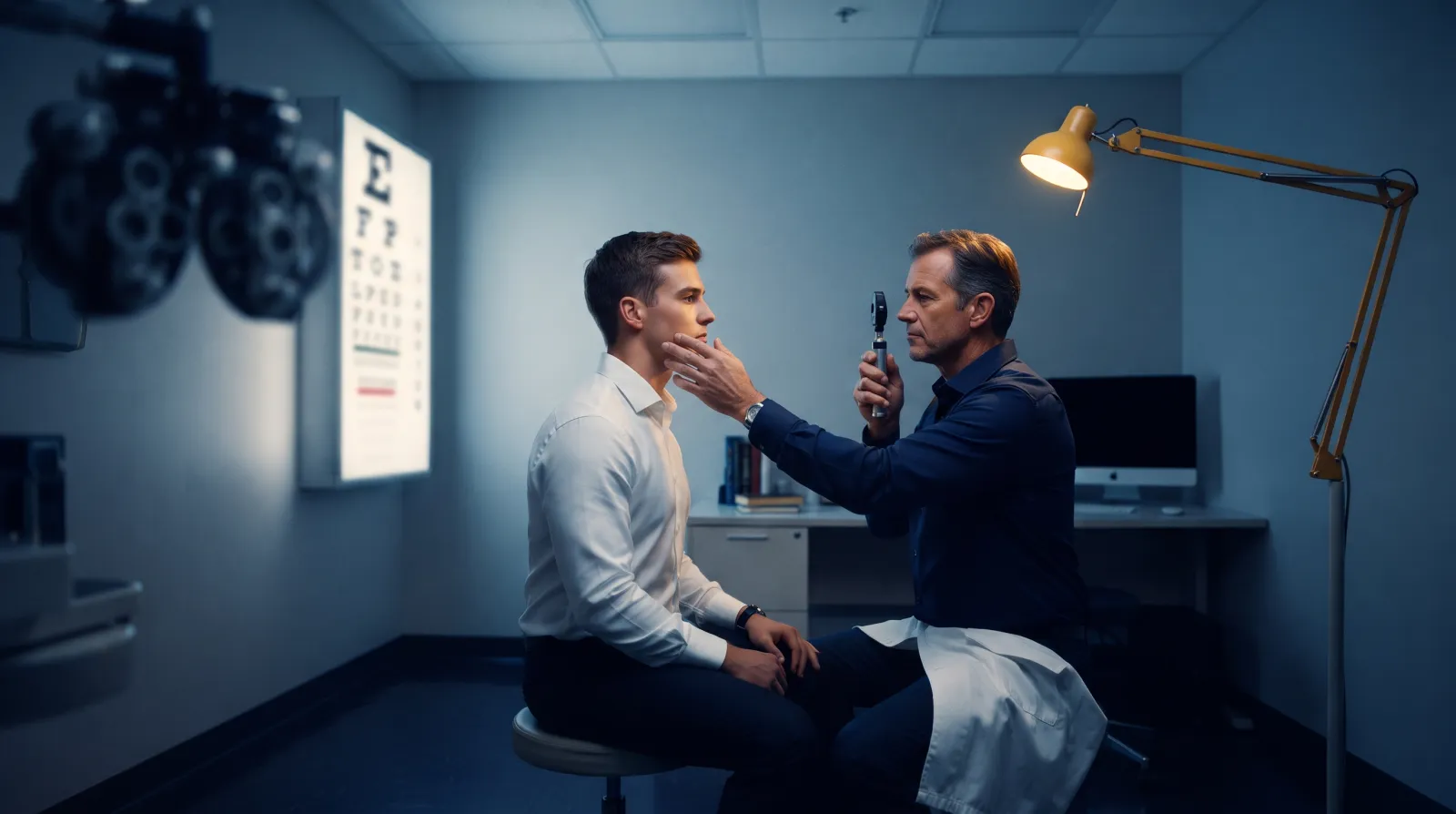
Learn what the aviation medical certificate is, what is usually assessed and why it's worth going through this process before starting your pilot training.
If you're thinking about studying aviation, you probably have questions about the medical exam to become a pilot in Colombia: what do they assess? Is it mandatory? Can I be a pilot if I wear glasses? Can a medical condition keep me from flying?
The process isn't meant to require every applicant to be in perfect physical condition. Its purpose is to confirm that the person has the psychophysical fitness needed to carry out aviation activities safely.
In this guide we explain the general aspects of the aviation medical certificate and what to keep in mind before starting your pilot training.
What is the aviation medical certificate?
The aviation medical certificate is the document that shows whether a person meets the psychophysical fitness requirements set for exercising the privileges of an aviation license.
In Colombia, this process is regulated by the Aerocivil under RAC 67. The evaluation must be done by an authorized medical examiner, who reviews the applicant's health and records the corresponding process.
The Aerocivil explains that medical certification is an assessment of psychophysical fitness and that certificates are issued by authorized medical examiners.
Why is the medical exam needed to become a pilot?
Operating an aircraft demands concentration, decision-making, effective communication and an appropriate response to normal or unexpected situations.
That's why the exam seeks to identify conditions that could pose a risk to:
- The pilot's safety.
- Passengers and other crew members.
- The operation of the aircraft.
- Decision-making during the flight.
- Physical and mental performance under pressure.
This certificate is part of the aviation training and licensing process. It doesn't replace the academic requirements or the practical evaluations the student must complete.
What class of medical certificate does a pilot need?
The class of certificate depends on the license and the aviation privileges the person wants to exercise.
Class 1 medical certificate
It's generally tied to professional licenses, such as the Commercial Pilot (airplane) license. Because of the responsibility and the conditions of professional operations, its criteria are stricter.
Class 2 medical certificate
It's generally tied to the Private Pilot license and other aviation activities set by the regulations.
A student who starts as a private pilot and later moves on to commercial pilot may need to change from Class 2 to Class 1. The Aerocivil notes that this change must begin with a medical examiner and be processed through the SIGA system.
Important: the right class must be confirmed according to the license applied for, the training stage and current regulations.
What is assessed in the aviation medical exam?
Exams and assessments can vary with the class of certificate, age, medical history and the medical examiner's judgment. The review can include the following:
1. General health
Medical history, surgeries, treatments, medications and conditions that could affect performance during a flight operation are reviewed.
It's important to answer honestly. Hiding information can delay the process and cause later problems with certification.
2. Eyesight
Vision is one of the topics applicants ask about most. During the assessment, they may check:
- Visual acuity.
- Near and distance vision.
- Color perception.
- Eye coordination and function.
- Use of glasses or contact lenses.
Can I be a pilot if I wear glasses?
Wearing glasses or contact lenses doesn't automatically mean a person can't become a pilot.
The decision depends on the result of the assessment, the visual correction achieved and the requirements for the certificate applied for. In some cases, the certificate may include specific conditions or restrictions.
The final assessment must always be made by an authorized medical examiner.
3. Hearing
Clear communication is essential in aviation. That's why the assessment may check the ability to hear and understand communications, instructions and audio signals.
4. Cardiovascular and respiratory system
Depending on the case, aspects such as blood pressure, cardiovascular function, breathing and other factors related to safe performance in flight may be assessed.
5. Coordination and nervous system
Coordination, reflexes, balance and relevant neurological history may also be reviewed.
6. Mental health and emotional management
Aviation demands responsibility, stability, teamwork and the ability to make decisions. That's why the process may consider psychological and mental health aspects related to operational safety.
This doesn't mean that having seen a psychologist before automatically disqualifies an applicant. Each situation is reviewed individually.
7. Additional tests
Depending on the type of certificate, medical history and the doctor's judgment, additional tests or assessments with other professionals may be requested.
The Aerocivil states that the applicant must take the exams and assessments the medical examiner's group determines.
Does a medical condition automatically rule out becoming a pilot?
Not necessarily.
Some conditions can be compatible with aviation, be controlled with treatment or require further evaluation. In certain cases, restrictions or follow-ups may also be set.
That's why it's not a good idea to assume that a medical condition, wearing glasses, a surgery or a treatment rules out studying aviation. The conclusion must come from the official certification process.
When is the best time to take the exam?
It's best to get guidance on the medical certificate from the start of the process and, if possible, before making major commitments related to your training.
Doing it in time lets you:
- Find out whether you meet the required fitness.
- Resolve medical questions before starting.
- Submit additional tests when needed.
- Avoid delays in flight training.
- Identify which class of certificate applies.
How to prepare for the assessment?
These tips can make the process easier:
- Bring your ID document.
- Clearly report your medical history.
- Bring documentation of past treatments or surgeries.
- Bring your glasses or contact lenses if you use them.
- Check in advance which documents and exams you need to bring.
- Avoid self-medicating before the assessment.
- Make sure your personal details are recorded correctly.
- Follow the medical examiner's instructions.
It's not about "passing" the exam by hiding information. It's about showing you can carry out aviation activities safely.
How does the process work in Colombia?
In general, the applicant must:
- Confirm which class of certificate they need.
- Update or register their information in SIGA.
- Submit the corresponding application.
- Choose an authorized medical examiner.
- Take the requested assessments and exams.
- Check that the recorded details are correct.
- Check the status of the certificate afterward.
The procedure may change or require additional steps, so always check the Aerocivil's current information.
Institutional reference: Colombian Civil Aviation Authority (Aerocivil), RAC 67 regulations and aviation personnel licensing services.
Take the first step toward your pilot training
The aviation medical certificate is one of the first steps to start a career in aviation safely and responsibly.
At Falcon Aviation Academy we can guide you on the training path, the differences between Private Pilot and Commercial Pilot, and the general requirements to start.
Want to know which program best fits your goal?
Published on September 16, 2026